Neighborhood Street Signs
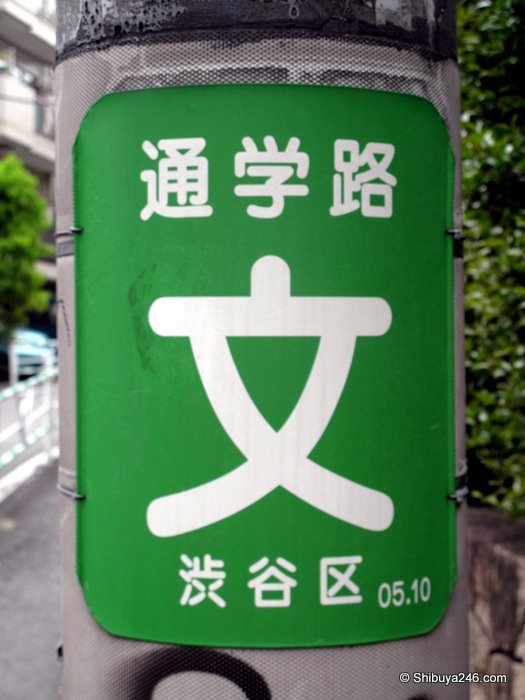 Photo dataCameraCanon PowerShot G10Focal length16mmAperturef/3.5Shutter1/200sISO100Taken3 May 2009, 13:58
Continuing the "Street Walk" series following the building construction photos, I photographed a number of street signs that are quite common in Tokyo. They have a uniquely Japanese feeling to them. When you walk past them everyday they become commonplace.
These street signs can be a great way for the beginner to learn Kanji since every time you pass them they can serve as a memory jog.
The sign above is a common one in Tokyo showing that the road is a designated travel path for school children. You can see Shibuya-ku (渋谷区) displayed at the bottom of the sign.
The following sign pasted to the front of a building when they are looking for new tenants is also a common site. Whilst internet advertising for offices and apartments has become very popular and of course real estate agents have full lists at their office, a sign like this can really catch the attention of passers by who might just be interested in renting at that location.
The red writing says "looking for tenant". The light blue writing is the name of the real estate company, with the dark blue writing saying "please feel free to contact the agent for property details"
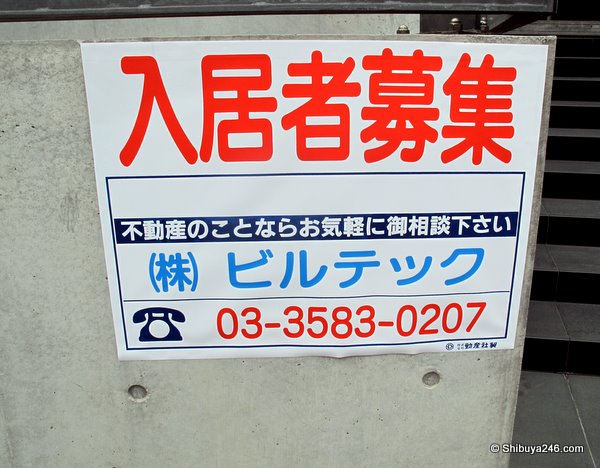 Photo dataCameraCanon PowerShot G10Focal length6mmAperturef/4Shutter1/400sISO80Taken3 May 2009, 14:05
This is a fairly typical, although graffiti-ed, fire extinguisher box. You can see on the top it even has it written in English, just in case a foreigner needs to put out a fire :)
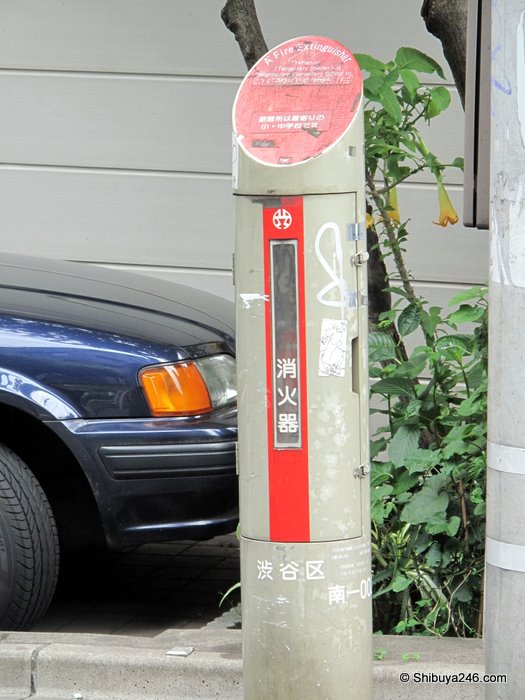 Photo dataCameraCanon PowerShot G10Focal length30mmAperturef/4.5Shutter1/200sISO200Taken3 May 2009, 13:58
This sign is very common for most apartment buildings. When putting out the rubbish you have to separtate burnable from non-burnable and then there are special days for large rubbish and other items. This sign has quite a bit of English on it, but you can expect many of them to be totally in Japanese. This sign provides a good teaching aid since it has both English and Japanese together.
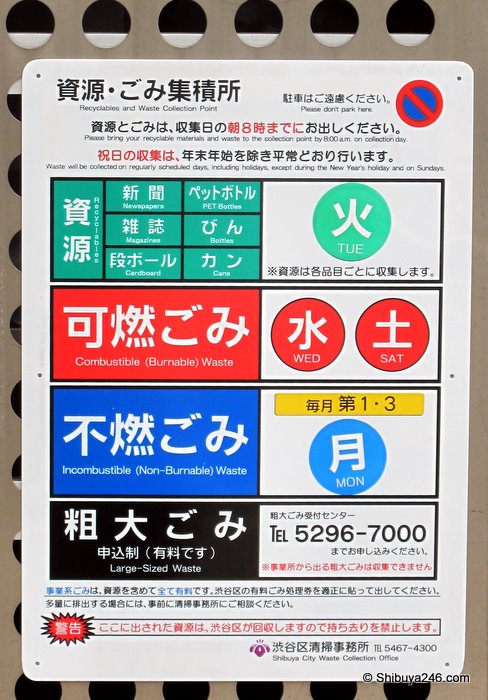 Photo dataCameraCanon PowerShot G10Focal length18mmAperturef/4Shutter1/250sISO100Taken3 May 2009, 13:56
When carrying out road or building construction, there are normally a set number of signs that you will see around the area. One is the following sign, apologizing for any inconvenience that might be caused during the construction work.
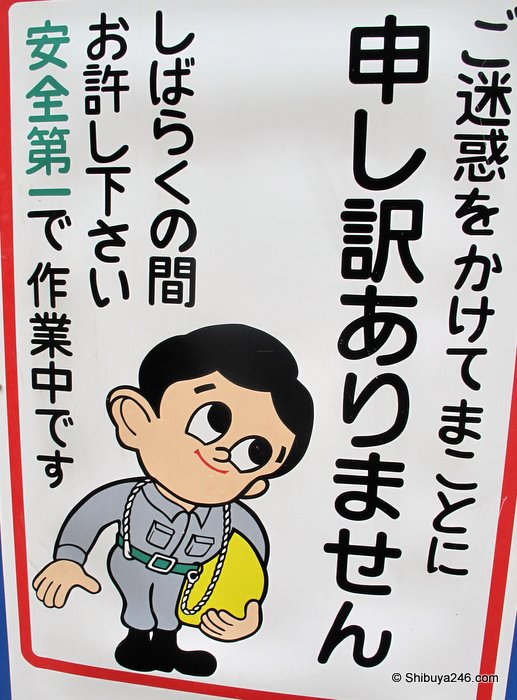 Photo dataCameraCanon PowerShot G10Focal length6mmAperturef/4Shutter1/250sISO80Taken3 May 2009, 14:11
To make sure you don't try to enter the site this one says "No entry"
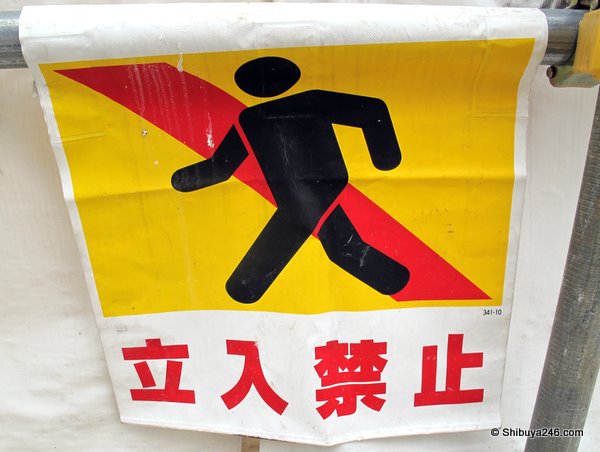 Photo dataCameraCanon PowerShot G10Focal length6mmAperturef/4Shutter1/250sISO80Taken3 May 2009, 14:12
A very well known sign at construction sites is the following one, 安全第一, "Safety First". It's history is said to go back to the early 1900's when US Steel coined the phrase "safety first", and was brought to Japan around 1913, becoming a national slogan for progress.
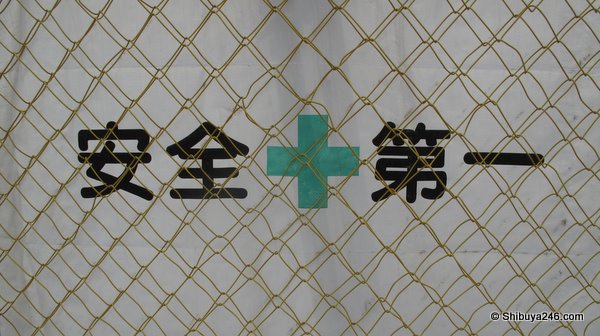 Photo dataCameraCanon PowerShot G10Focal length6mmAperturef/4Shutter1/500sISO80Taken3 May 2009, 14:12
Moving away from construction signs, this picture of a dog tells people that the area is an official safe house area for children. This system was set up for the community to keep an eye out for suspicious activity and assist children if they are in trouble. Note the dog is wearing a sash that says his name is Hachiko-kun.
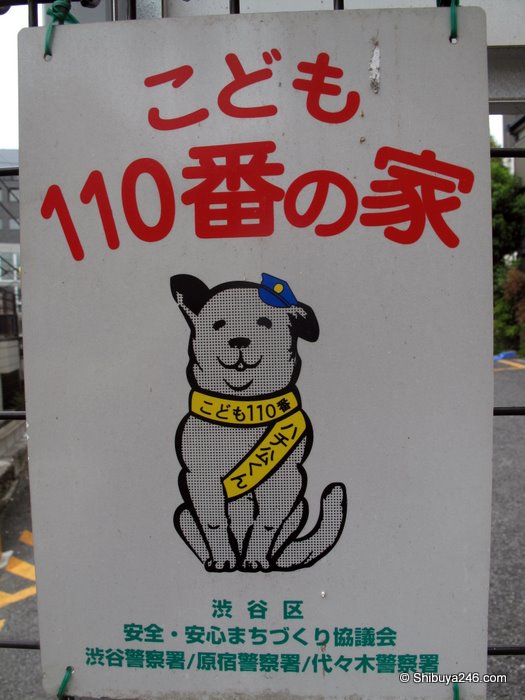 Photo dataCameraCanon PowerShot G10Focal length6mmAperturef/4Shutter1/320sISO80Taken3 May 2009, 14:12
Here is a quick link to the Tokyo Metropolitan Police Departments website explaining how you can get involved in the safe house area for children. (Japanese language only)
I found this sign in a local park (the mens toilet was not meant to be part of the photo). The sign is explaining the rainwater storage barrel that is for times of natural disaster.
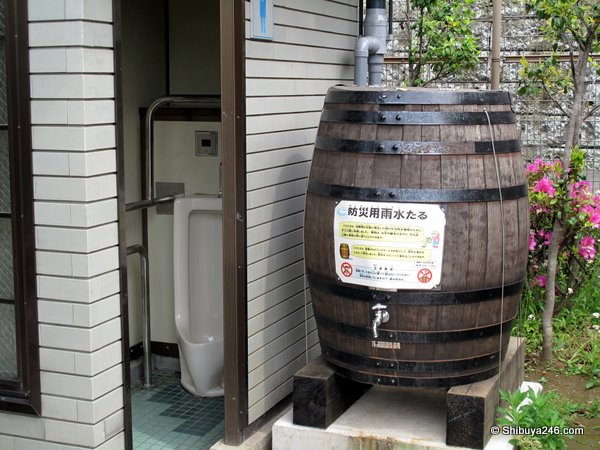 Photo dataCameraCanon PowerShot G10Focal length12mmAperturef/3.5Shutter1/160sISO80Taken3 May 2009, 14:07
Looking at the sign closely, you can see the kanji text has been supplemented with furigana, written on top of the Kanji. Presumably this is so that young children can also read the full text. The explanation says that you can use the water for flowers and park cleaning as well as in disaster times such as earthquakes.
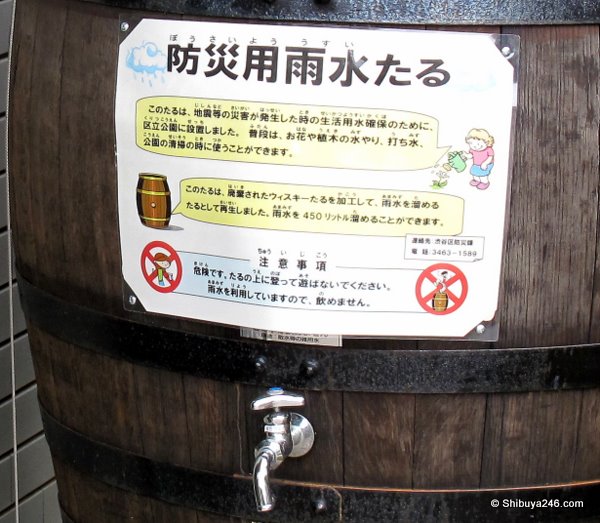 Photo dataCameraCanon PowerShot G10Focal length12mmAperturef/3.5Shutter1/160sISO80Taken3 May 2009, 14:07
Noticeboards for the local area are common on the street. this one is for Nanpeidai. The notices look fairly old. Note the 2nd poster from the left where the police are still appealing for anyone who knows the whereabouts of the Aum Shinrikyo members.
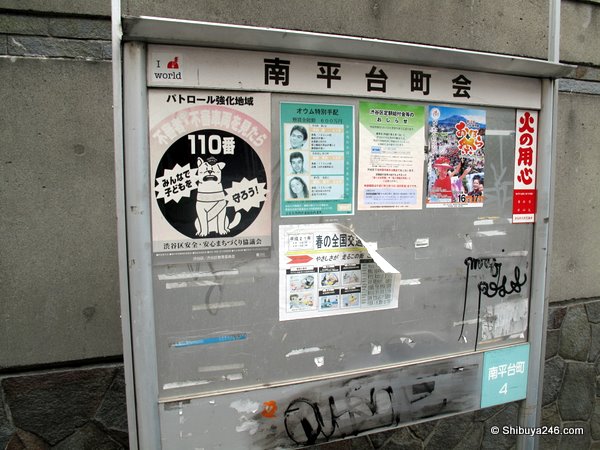 Photo dataCameraCanon PowerShot G10Focal length6mmAperturef/4Shutter1/160sISO80Taken3 May 2009, 14:01
Having looked at a number of closeups it is worth seeing the street as a whole. Here is a street with some construction work happening on the right. How many signs can you see in this picture? Every telegraph post seems to have some form of advertising on it.
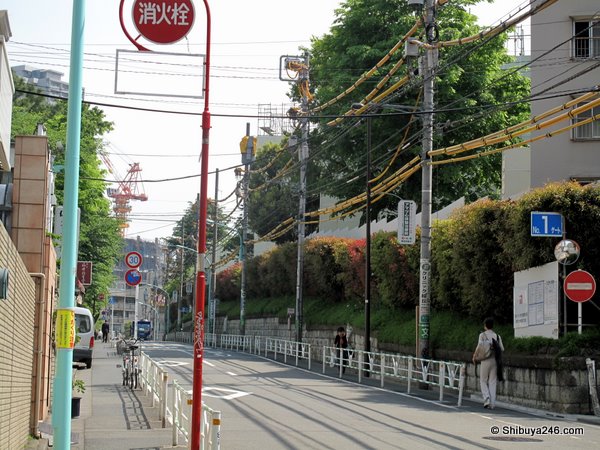 Photo dataCameraCanon PowerShot G10Focal length18mmAperturef/4Shutter1/500sISO80Taken1 May 2009, 13:28
Look at the policebox, Koban, sign in this photo. It is in the top of the shot in green. The sign it written only in romaji.
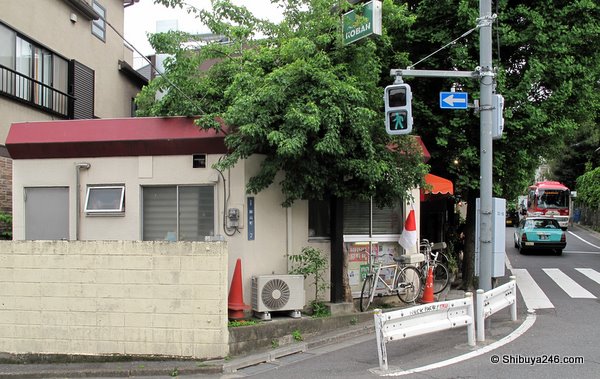 Photo dataCameraCanon PowerShot G10Focal length6mmAperturef/4Shutter1/250sISO80Taken3 May 2009, 14:04
Many road signs in Tokyo are written in romaji as well as Kanji. Here is a typical road sign.
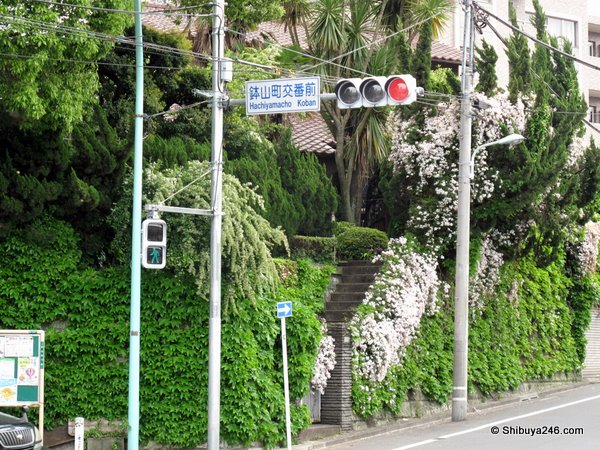 Photo dataCameraCanon PowerShot G10Focal length21mmAperturef/4Shutter1/200sISO200Taken3 May 2009, 14:04
A look at street signage would not be complete without seeing a few, or a lot, of posters for politicians. It seems like there is always some sort of local or Prefectural or National election going on and the posters are everywhere.
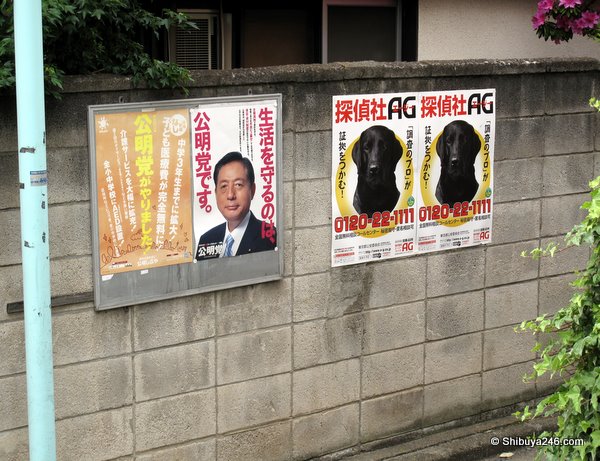 Photo dataCameraCanon PowerShot G10Focal length16mmAperturef/3.5Shutter1/200sISO80Taken3 May 2009, 14:06
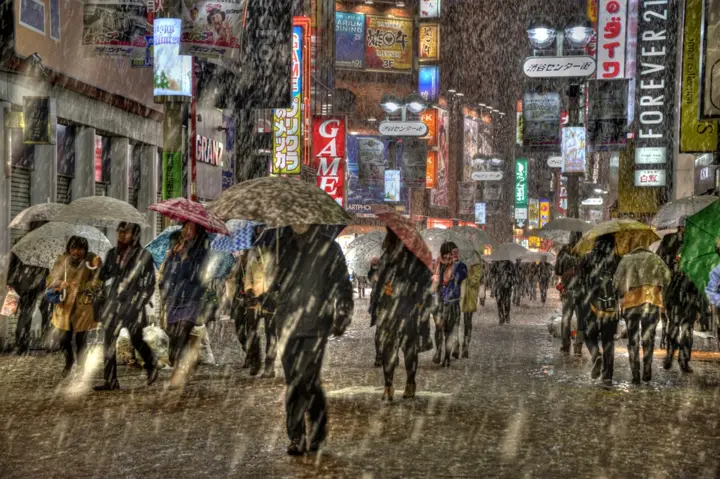
How many different signs do you pass on the street everyday and not really notice?
18 comments
Comments are closed. These are from readers when the post was first published.
James
This is actually how I learned my first few kanji. Walking through train stations. you see 出口 and 入り口 they are all over the place.
Shibuya246
Perfect way to do it :)
Ryan
Yea, I found that I was doing the same thing on my last business trip: looking at signs and memorising the kanji. After a whole month of this, it's impossible for the darn things not to be ingrained!
Jon Allen
it was a long time before I found out what the black dog was advertising. Why the dog ?
Billy
This is a great way to learn. When the writing is in both English and Japanese it's important to make a point to look at the Kanji so it sinks in. I wish there wasn't as much English around because my eyes automatically go straight for it even when I know the Kanji.
Ryan
Mine do exactly the same! Annoying..
Shibuya246
Looks like he is a real dog. Must be the owners dog maybe. Here is the page on their website talking about Kuro, the dog, who they say is a real life detective. http://www.a-g.co.jp/company/index03.html Wonder if he is licensed to carry a weapon?
Shibuya246
Another way to try and train your eyes to "stick" to the Kanji, is to watch English language movies with Japanese subtitles. Focus on the subtitles and try to read them before they change. After a while you will be subconsciously reading the movie as well as listening to it. Very good practice.
Nick
how about posting the reading of the signs in Japanese so we can remember the reading too?
freedomwv
The last one looks like it was taken right outside my house. Although, I really doubt that is the case.
Jamaipanese
i love the commentary on the last sign I wouldn't be surprised if that dog was running for PM
Shibuya246
I actually made a mistake when I first posted it and said "the dog on the left is not running for PM". Good job I spotted that and changed it to say the dog on the right. B) Thx for dropping in again.
Shibuya246
Those signs are everywhere aren' t they? Must be a lot of money in the investigation business.
Shibuya246
I'll see about organizing that. thanks
Andrew J
Great collection of signs and commentary on them. This will again help me take a little piece of Japan into my Japanese classes. I had been searching flickr for things like this but you've put them all into one page! Thank you! Andrew J
Shibuya246
Thanks. I'll add some more to a second post later and include the Japanese and English words. Might even make this a regular series if people are interested
2nihon
That's too bad, I would've voted for the dog. Yes, do please make it a series. I love posts like this.
Eowyn Tamriel
Wow, this article is not the newest, but still very relevant! I stumbled upon this page in an effort to understand more next time I go to Japan. Last time, the seemingly endless clumps of kanji really intimidated me and I found myself hardly trying to understand, and sticking to hiragana/katakana. I'm sure you all know you don't get very far with that approach. :-) I have since developed a love for challenging signs and have gone through my old photos, looking for things I might now understand (with more success than I imagined!). I was wondering whether you or anyone else is interested and willing to explain more signs just for fun. I would not only be interested in street signs, but also those in stores. Like are there typical expressions of special offers? Sales? Member-only deals? Signage in supermarkets/departement stores? I don't really care about the actual offers, but figure one would see those types of expressions a great deal, which is great for learning. It would be brilliant to have the kanji part as text that can be copied and pasted; I would look up each individual "new" kanji to understand the meaning better once I'm there again. Even if no one has time, this was already very interesting and it's great to see others using the same approach towards learning. Thank you!